

Do your Meta Ads catch attention but fail to deliver real results? The issue often lies not in the campaigns themselves, but in the lack of a well-thought-out strategy.
Effective online sales are a process – from building awareness, through engagement, to conversion. That’s exactly what a sales funnel is for.
In this article, we’ll show you how to build such a funnel step by step in Meta Ads, tailor your ads to each stage, and successfully guide your audience from the first click to purchase.
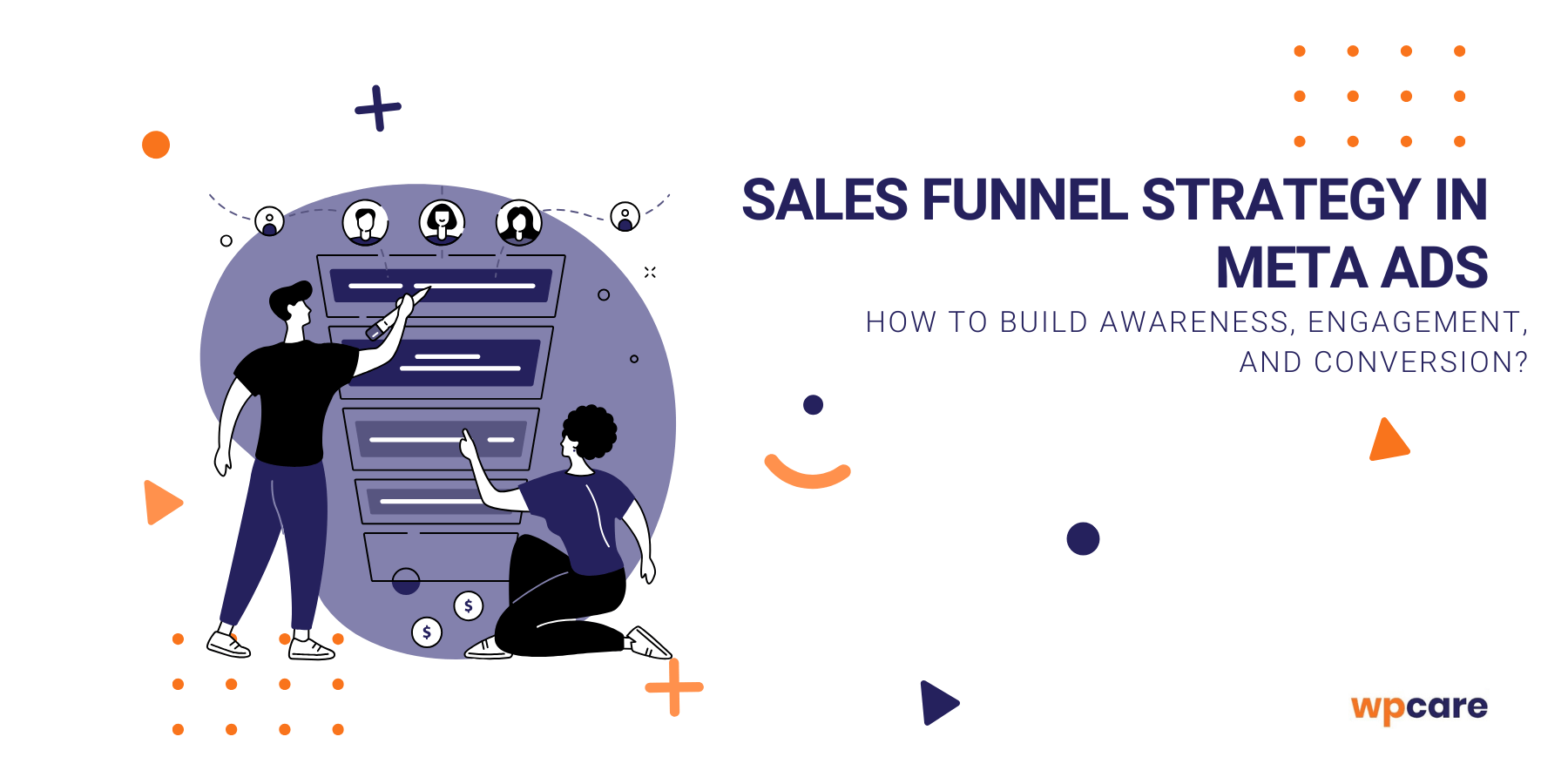
What is a sales funnel?
A sales funnel is a way of planning the path a customer takes – from the moment they first see your brand to making a purchase.
Why a “funnel”? Because at the beginning, you have a wide group of potential customers, but only some of them will become your clients. A funnel helps organize this process and align marketing actions with each stage: awareness, engagement, and finally – sales.
A well-designed funnel not only increases conversions but also helps build lasting customer relationships.
Sales funnel stages
A sales funnel breaks the purchasing decision process into three main stages: TOFU, MOFU, and BOFU. Each requires different communication and campaign goals.
TOFU (Top of Funnel) – awareness
This is the first contact the audience has with your brand. At this stage, you’re not selling – you’re attracting attention and building recognition.
Goal: Reach new people and make your brand memorable.
Example actions:
- Video ads, reach posts, educational content
- Targeting cold audiences (interests, lookalikes)
MOFU (Middle of Funnel) – engagement
Here, the audience already knows you but needs more information to consider buying. You build trust and encourage interaction.
Goal: Engage the audience and move them closer to a purchase decision.
Example actions:
- Ads with testimonials, case studies, guides, lead magnets
- Targeting people who watched a video, visited your website or profile
BOFU (Bottom of Funnel) – conversion
This is when the customer is ready to buy. Now you motivate action and help make the final decision.
Goal: Convert interested users into customers.
Example actions:
- Ads with offers, discounts, time-limited promotions
- Remarketing to people with abandoned carts or product views
Optimization and results analysis
An effective campaign is not just a good idea but also continuous testing and improvement. Without data analysis, it’s hard to tell what truly works and what just wastes your budget.
What to focus on:
- CTR – are people clicking your ads?
- CPC – how much does each click cost?
- Cost per conversion – how much are you paying to get a customer?
- ROAS – is your campaign generating return?
What to do:
- Test different ad variations – change creatives, headlines, buttons.
- Split campaigns by funnel stages – different ads for TOFU, MOFU, and BOFU.
- Use remarketing – follow up with people who already know you.
- Check your audience – are you targeting the right people?
Useful tools:
- Meta Ads Manager – detailed campaign data.
- Meta Pixel – conversion tracking on your site.
- Google Analytics – additional insight into user behavior.
Example of a funnel strategy
To better understand how a sales funnel works in Meta Ads, let’s look at a simple campaign example for a natural cosmetics store.
Goal: Sell a facial serum
TOFU – awareness
Target group: Women aged 25–45, interested in skincare
Campaign type: Brand awareness / video
Creative: Short educational video: “5 Skincare Mistakes You Might Be Making”
CTA: “Learn more” – leads to the brand’s blog or profile
MOFU – engagement
Target group: People who watched 50% of the video or visited the blog
Campaign type: traffic / engagement / lead ads
Creative: Post with a customer review and a link to a serum tester
CTA: “Order a free sample”
BOFU – conversion
Target group: People who ordered a sample or added the product to cart
Campaign type: conversions / catalog sales
Creative: Ad with -10% discount and a time limit
CTA: “Buy now” / “Offer ends Sunday”
This structure guides the customer step by step instead of pushing for an immediate sale. As a result, engagement, trust, and… sales increase.
Common sales funnel mistakes
Even the best product won’t sell well if your advertising strategy has gaps. What are the most common mistakes?
- Skipping the top of the funnel (TOFU)
Pushing sales too quickly. People don’t buy from brands they don’t know. First, you need to build awareness. - Lack of campaign segmentation
Sending the same ad to everyone – whether it’s their first time seeing you or they’ve visited your site. Each funnel stage needs a different message. - Poorly matched content
Too generic or too pushy. A sales ad in TOFU can repel, and an overly informative one in BOFU won’t convert. - No remarketing
Not following up with interested users? That’s a huge missed opportunity. Remarketing is the cheapest and most effective way to close sales. - No performance analysis
A “set it and forget it” campaign is a common mistake. Without regular analysis and optimization, it’s hard to learn and improve results.
Summary
Effective advertising in Meta Ads is more than just one campaign with a “Buy now” button. It’s a strategic process – from awareness to engagement to conversion. A sales funnel guides your audience step by step instead of trying to sell right away.
If you want your ads to really work, start by organizing your strategy. Think about who your audience is, what stage they’re at, and what they should see next.
Remember – it’s not about having more ads. It’s about having better-targeted ones.
with effective Meta Ads campaign management
Tired of wasting your budget with no results? Leave it to us – we’ll plan and manage your Meta Ads campaigns to genuinely support sales in your business.We’ll tailor the strategy to your industry, cover every stage of the funnel, and handle optimization – you focus on running your business, and we’ll deliver the results.
Order the service