

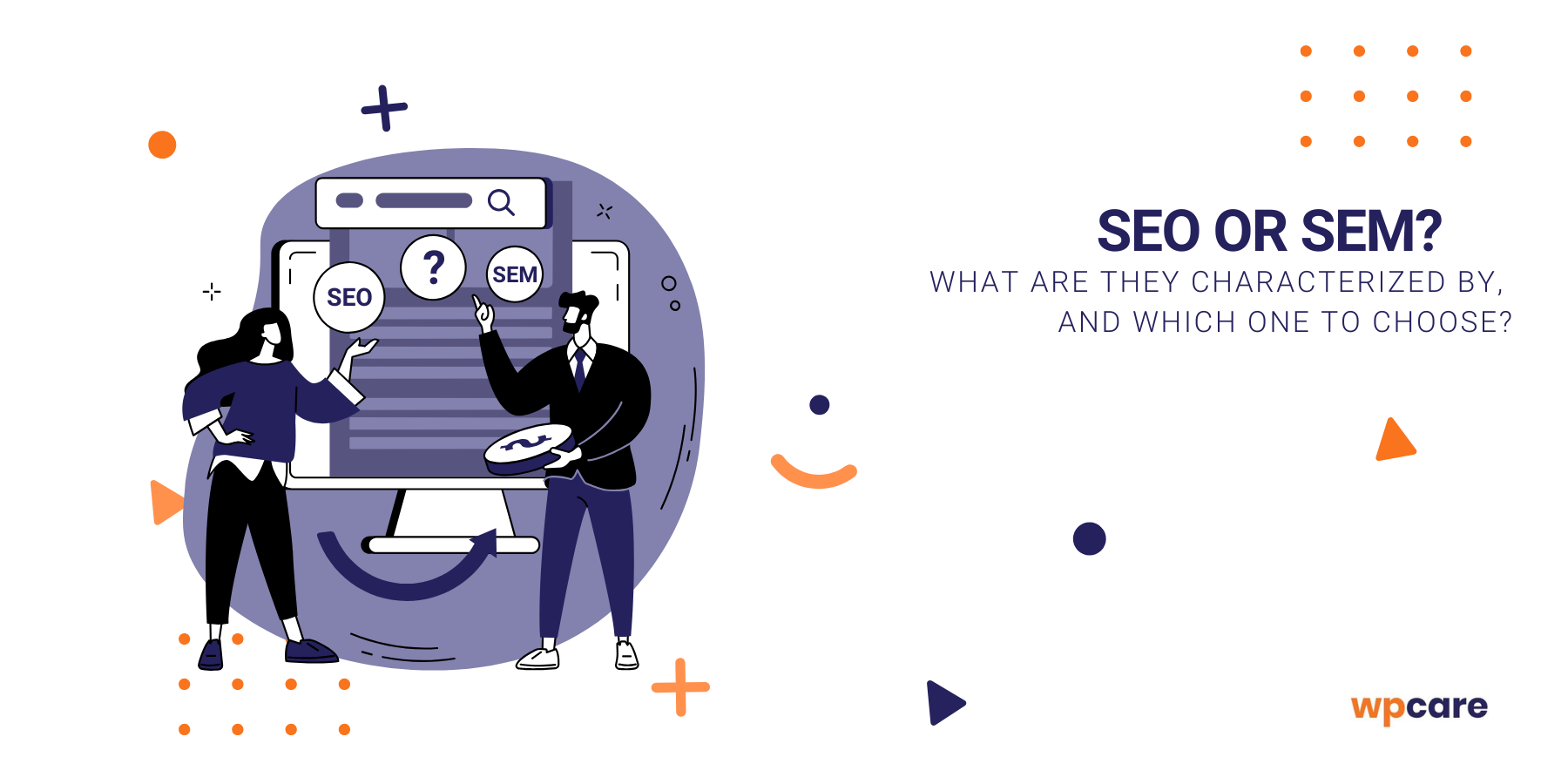
You have probably heard of two terms that are often cited as the foundations of online marketing: SEO (Search Engine Optimization) and SEM (Search Engine Marketing). Although both terms are intrinsically linked to search engines, they differ in their approach, goals, and methods. SEO focuses on optimizing a website for search engines to increase its visibility and position in organic search results. SEM, on the other hand, includes paid strategies such as PPC (pay-per-click) ads, which offer almost immediate effects and visibility online.
Although both methods have their advantages, choosing between SEO and SEM can be difficult, especially for companies taking their first steps in digital marketing. Should you invest in the long-term and often more complex SEO strategy, or focus on the immediate results offered by SEM? The goal of this article is to provide an overview of both strategies, their advantages and disadvantages, and help you decide which one will work best for your business.
Online marketing
SEO – definition
SEO (Search Engine Optimization) is the process of optimizing websites in order to achieve a higher position in organic (non-paid) search results. It is a long-term strategy that involves adjusting the elements of a website to make it more attractive to search engines such as Google.
Key elements of SEO
- Keywords: Analyzing and using words and phrases that users most frequently search for on the Internet to optimize website content for those queries.
- Content optimization: Creating high-quality, valuable content that is both search engine-friendly and user-friendly. This includes both text and multimedia.
- Link building: Gaining links from other reputable websites, which is a signal to search engines about the credibility of the site.
- Technical optimization: Improving technical aspects of the website, such as loading speed, mobile responsiveness, and clear site structure.
- Long-term strategy: The effects of SEO are considered in the long term. This strategy does not bring immediate results and often requires significant effort and costs.
SEM – definition
SEM (Search Engine Marketing) is a branch of online marketing focused on promoting a website by increasing its visibility in search results. It is often associated with PPC (pay-per-click) ads, where advertisers pay for clicks on their ads. Furthermore, it allows for rapid results and effective targeting of a specific audience.
Key elements of SEM
- PPC ads: SEM is based on creating and managing paid ads that appear in search results, on Google partner sites, or on platforms such as YouTube, Facebook, Instagram, Gmail, and more.
SEM is highly effective due to the immediacy of its results. PPC ads allow for quick access to the target audience and an increase in website traffic. Additionally, SEM is highly measurable and flexible, enabling rapid campaign optimization and better alignment with business needs. Moreover, SEM campaigns are billed only for achieved results.
SEO vs SEM – comparison
Definition and basic principles
SEO: Focuses on organically increasing a website’s visibility in search results through content optimization, technical aspects of the site, and link building.
SEM: Includes paid solutions such as PPC ads that provide both immediate and long-term visibility in search results.
Speed of results
SEO: It is a long-term strategy, with results often visible after several months.
SEM: Allows for quick results.
Costs
SEO: Requires time and resources, but does not generate direct costs per click. However, it is difficult to precisely determine the funds needed to achieve the desired results in advance.
SEM: Involves direct costs per click for ads but allows for precise budget and strategy management in the long term.
Reach and visibility
SEO: Focuses on building organic reach and brand credibility in the long term. The effects are not immediate.
SEM: Provides immediate visibility.
Market changes
SEO: Does not offer flexibility for rapid adaptation to changes.
SEM: Allows for quick adaptation of campaigns and strategies, which is beneficial both in the short and long term.
Measurability
SEO: Effectiveness is measured by considering search engine rankings, organic traffic, and other indicators.
SEM: Allows for detailed campaign performance analysis, providing precise analytical tools.
How to choose between SEO and SEM?
Business needs
- Analysis of business goals: Understanding what the company wants to achieve is key. If the goal is to quickly generate traffic and sales, SEM may be a better fit. If, on the other hand, the company aims for long-term results, SEO may be the better option.
- Industry and competition specifics: Different industries have different levels of competition in SEO and SEM. Analyzing the competition can help determine which strategy is more effective in a given sector.
Wondering how to analyze your competition in online marketing? Check out our article on this topic:

How to analyze your competition in online marketing?
Budget and resources
- Available budget: SEM often requires a significant initial budget, while SEO requires more resources, but due to the long-term nature of the strategy, these are spread out over time.
- ROI: An estimated ROI analysis of both strategies will help assess which method is more financially effective in the long term.
- Resources: SEO often requires hiring specialists within the company to handle this full-time, which adds additional costs. In the case of SEM, it is less time-consuming.
Multichannel marketing
SEO and SEM work best when they are part of an integrated marketing strategy that includes social media, content marketing, email marketing, etc.
It is important that both SEO and SEM are aligned with the overall brand message and communication goals. The ability to quickly adapt and change strategy in response to market conditions is important. SEM can offer more flexibility in the short term, while SEO is more focused on long-term planning.
Summary
The decision between SEO and SEM should not be treated as choosing one exclusive path, but rather as considering how to best integrate both strategies into a comprehensive marketing plan. Both approaches offer unique benefits and can be effectively used in different scenarios, depending on the company’s goals, budget, and resources.
Due to the dynamic nature of online marketing, it is crucial for marketers to remain flexible and continually improve their strategies. Whether you choose SEO, SEM, or a combination of both, the most important thing is to understand your brand’s needs and target audience, as well as be ready to experiment and learn as technology and trends evolve.
If you don’t have time to adjust your marketing strategy, and the choice between SEO and SEM is giving you a headache – trust the experts. As WP Care, we hold the official Google Partner status, ensuring the high quality of the services we provide. We will prepare an SEM action estimate for you, so you can see if this solution is right for you!
Contact us, and we will definitely help!
Check our offer